As one of the most common dinosaurs in the Wealden, let alone the Isle of Wight, there is quite a lot of this.
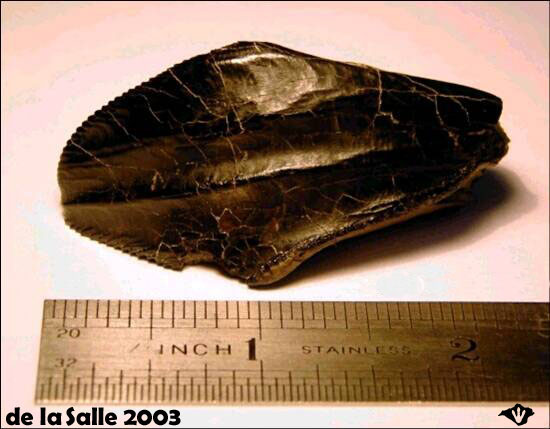
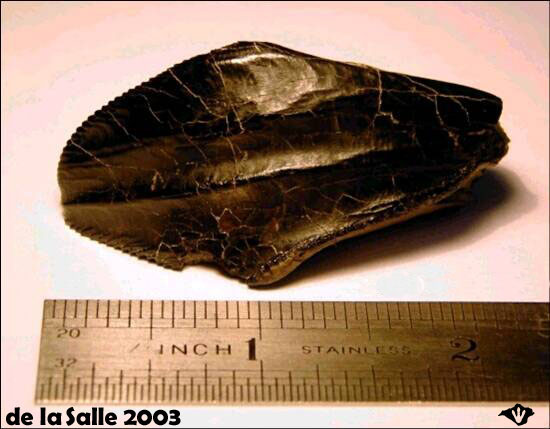
The distinguishing features of Iguanodon are in the skull, pelvis and foot, so most material is assumed to be Iguanodon just because it’s so common. The teeth can reach up to 40 mm (1½ inches) in height, and show an expanded crown and fine denticulation. The teeth of different jaws have different wear marks. On the upper jaw there is a prominent keel in the labial (outer) surface, where as in the lower jaw the teeth have two less prominent ridges on the lingual (inner) surface.
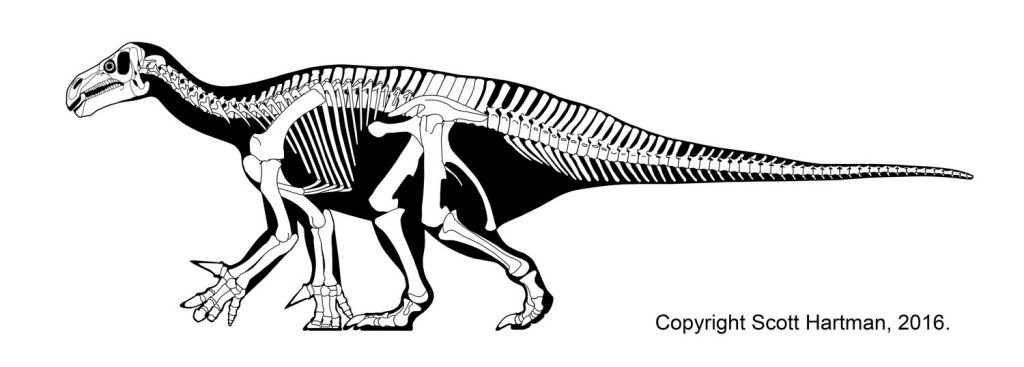
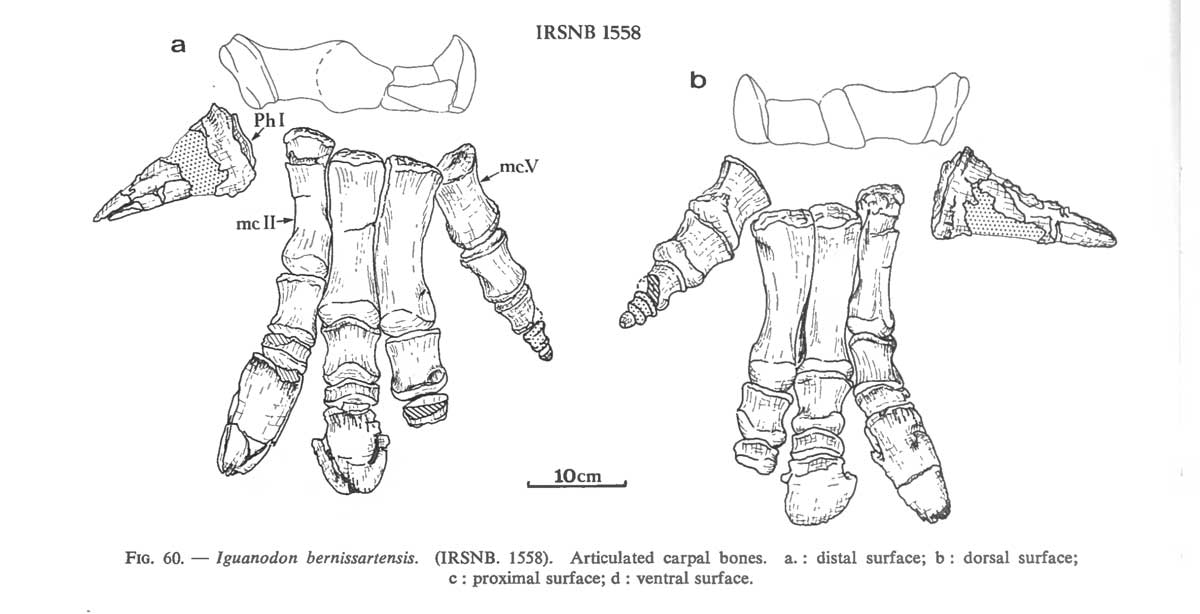
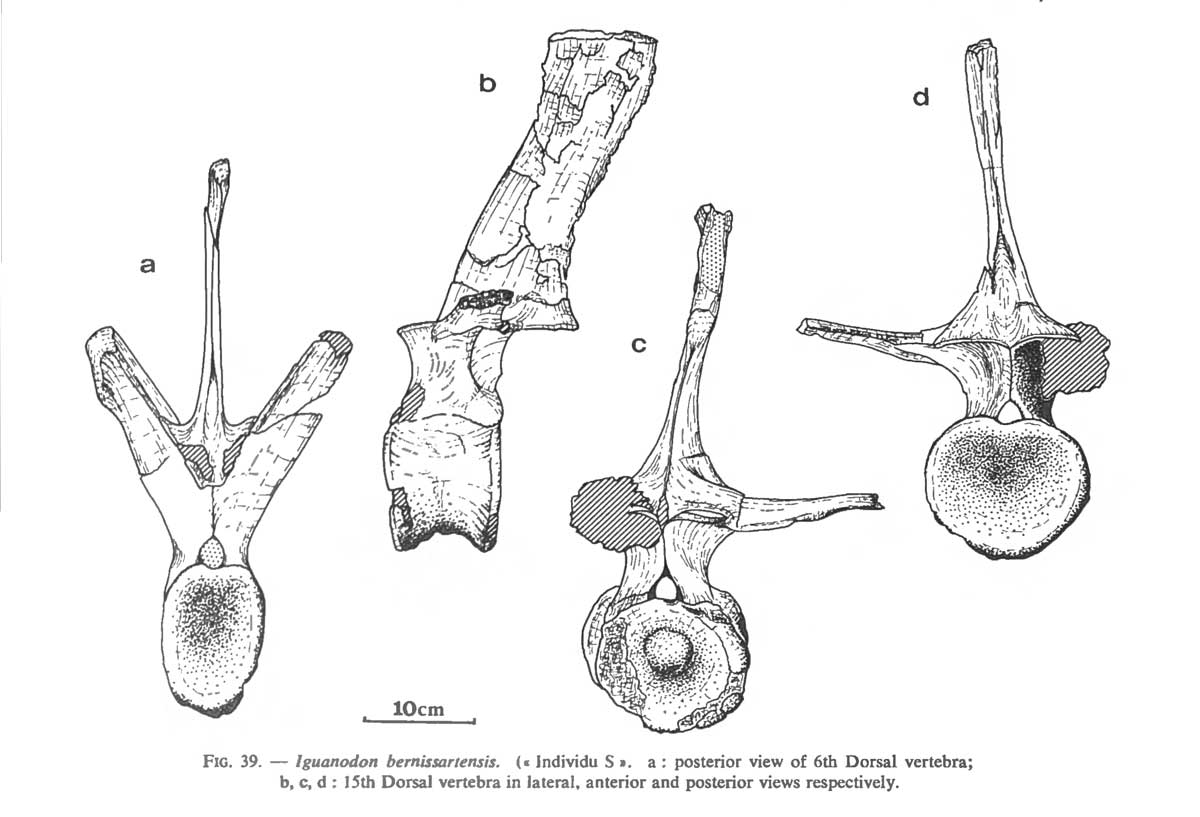
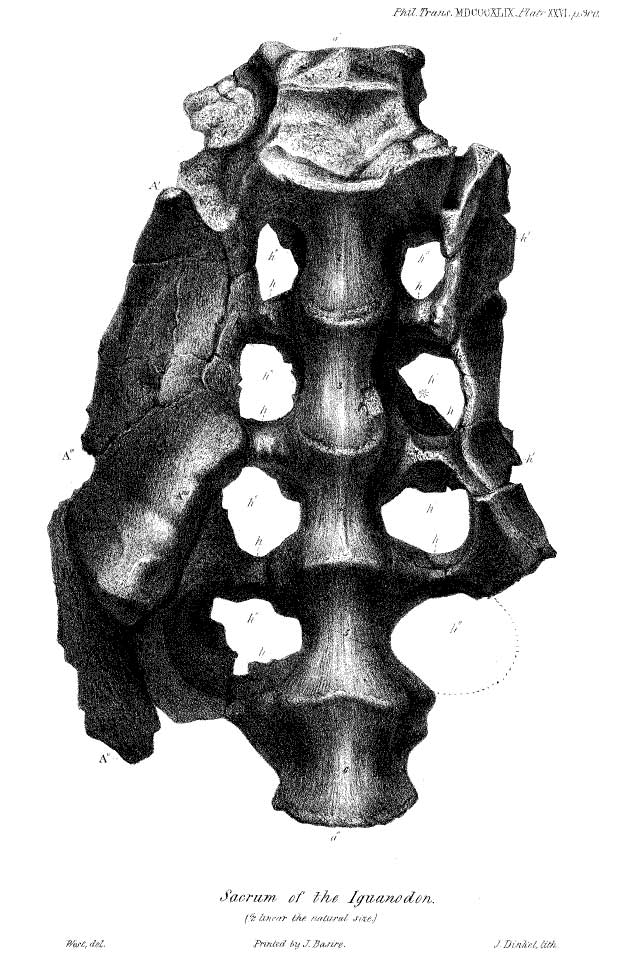
The skull is deep and robust with a laterally compressed snout, with the premaxillae and predentary forming a spoon-shaped beak with serrated margins. The quadrate is pillar-like. There were prominent palpebrals, and secondary palpebrals behind them, which is possibly unique to I. bernissartensis. The hands are large and robust, with an elongate conical thumb-spike. The phalanges of the second, third and forth fingers are shortened, with hooves on digits two and three.The forearms are 50-75% the length of its hindlimbs. The foot is tridactyl , with no hallux or fifth digit, and examples of their footprints can be seen at Hanover point. The vertebrae have short neural arches.
Iguanodon skin has also been found, which has a rough pebble-like texture.
Until 2006, there were believed to be two species of Iguanodon found on the Isle of Wight, I. bernissartensis and I. atherfieldensis. I. atherfieldensis has since been removed from the genus Iguanodon and so has been renamed Mantellisaurus atherfieldensis, which can be found HERE