
Meaning
New Hunter
Length
8 metres (26 feet)
Classification
Theropoda,
Neovenatoridae Benson et al 2009
Neovenator salerii Hutt, Martill and Barker, 1996
Locations
The type specimen was found in a plant debris bed 17 metres below the Grange Chine Sandstone at Grange Chine, so look there…
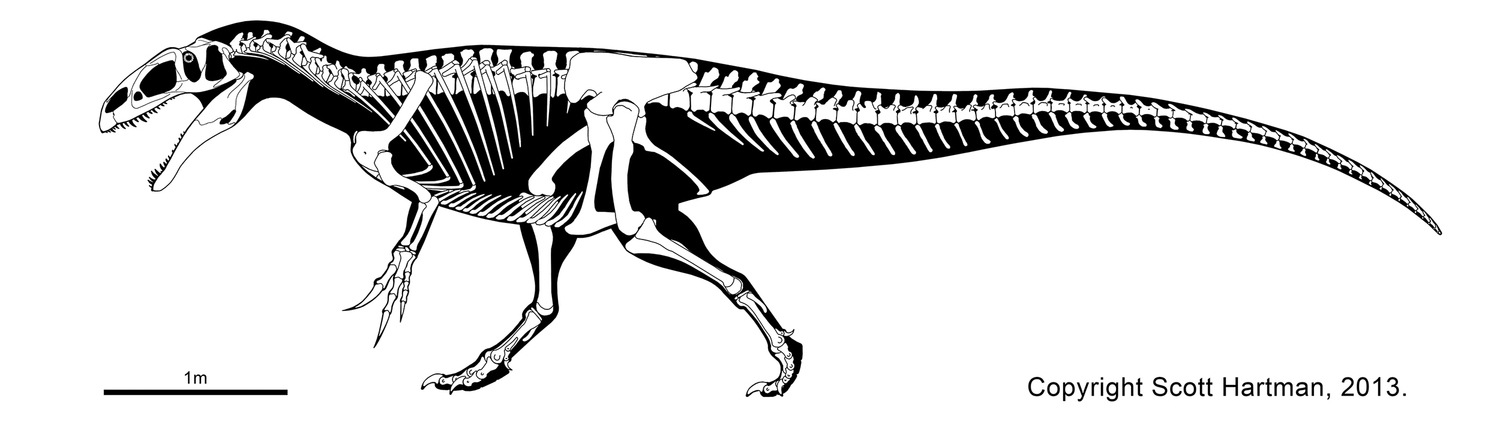
A large theropod, Neovenator would have hunted dinosaurs such as Iguanodon, and maybe even had a go at some of the sauropods that would pass through the area. It was almost certainly the major predator in the Wessex basin.
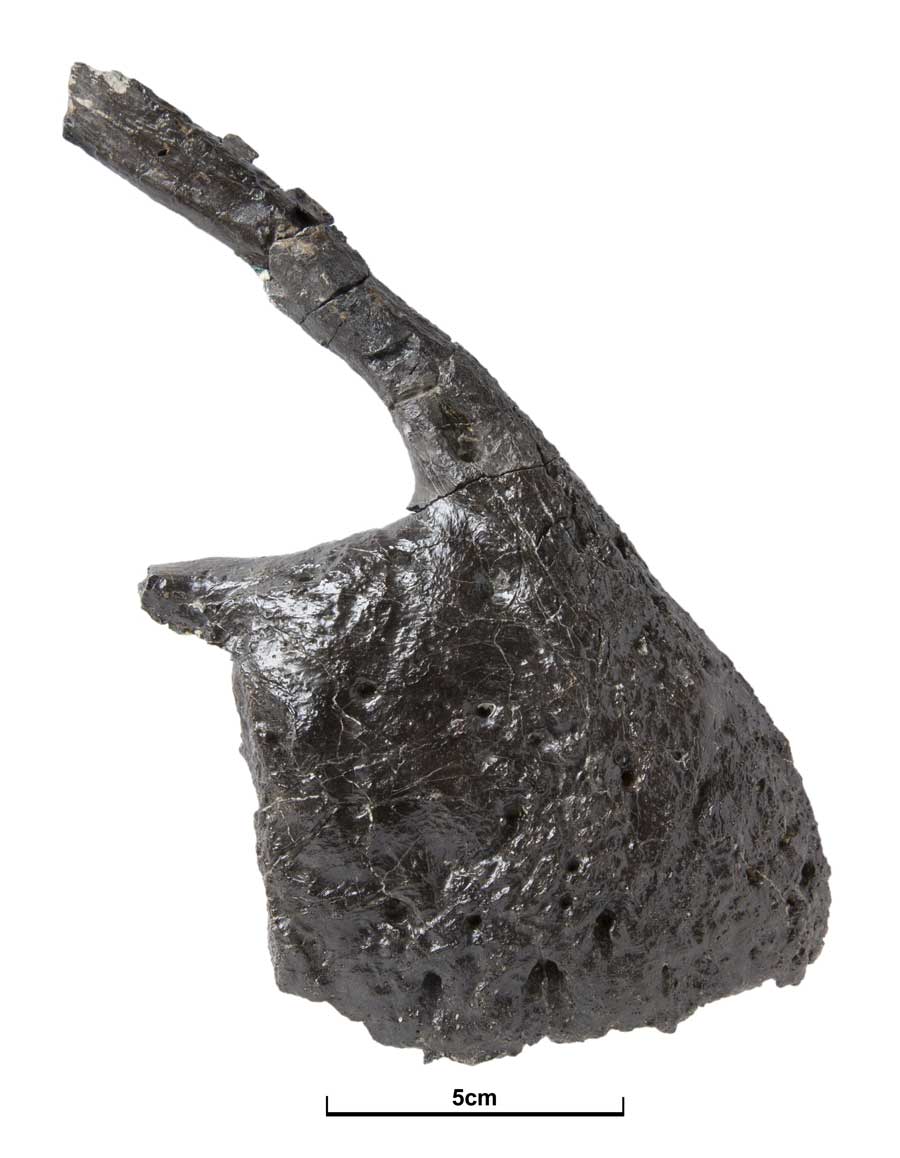
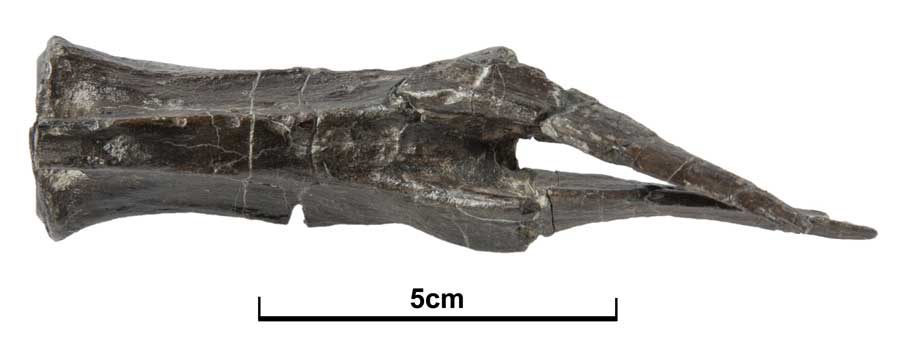
Neovenator has a short premaxilla with five teeth and numerous nutritive foramina. the anterior border has a sharp postero-dorsal slope. the suture with the maxilla is is almost vertical, and has a short posterior process on the dorsal margin. The maxilla is large, and high towards the anterior end. Sloping posteriorly with a large maxillary fenestra is a prominant ascending process.
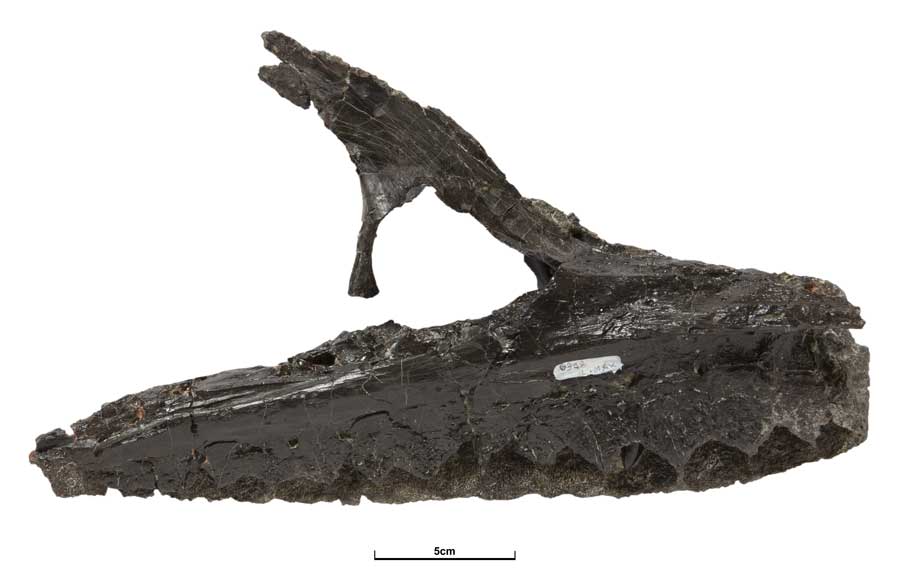
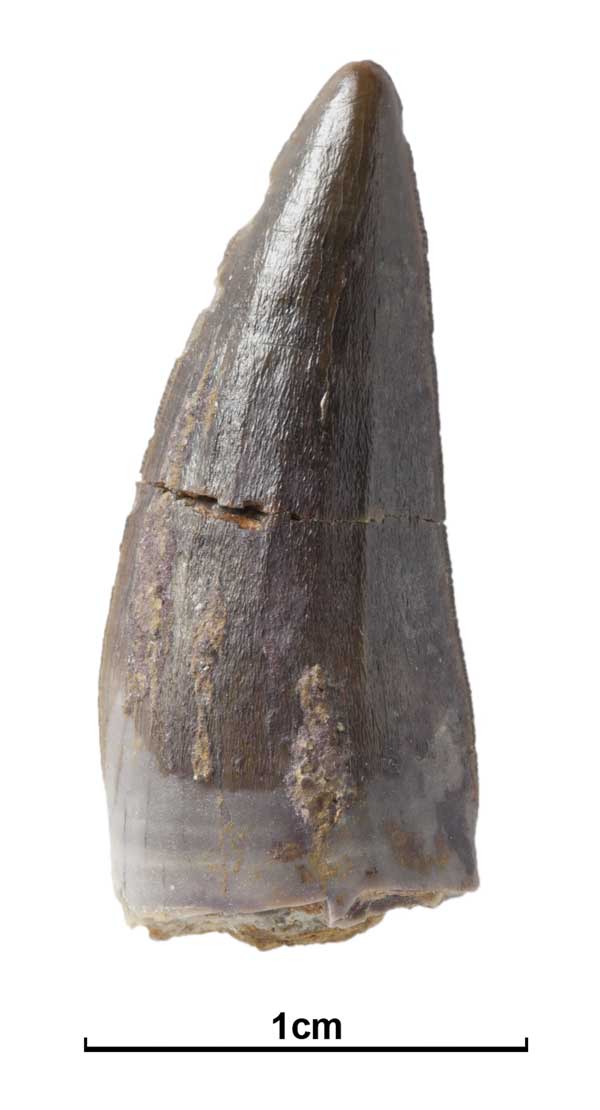
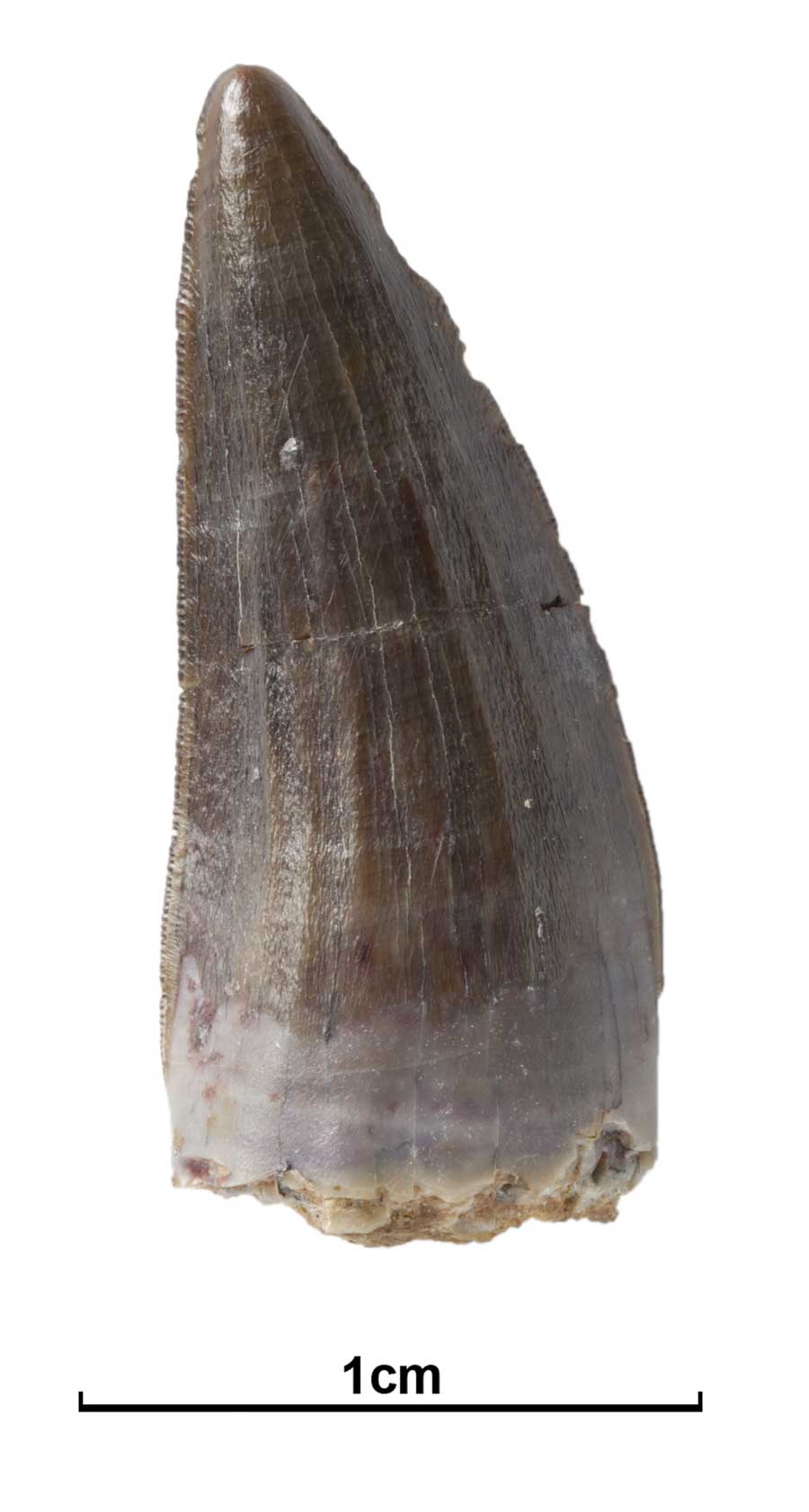
In the maxilla are fifteen alveoli, and the interdental plates ate fused. the teeth are labo-lingually compressed and recurve poisteriorly, and only the apical half of the anterior border and the whole length of the posterior border is serrated, with 12 serrations per 5 mm. The roots make up three quarters of the length of the tooth. The dentary is shallow and pointed anteriorly, with a pointed anterior, a narrow symphyseal region and an acute interdentary angle. to the anterior there are numerous nutritive foramina.
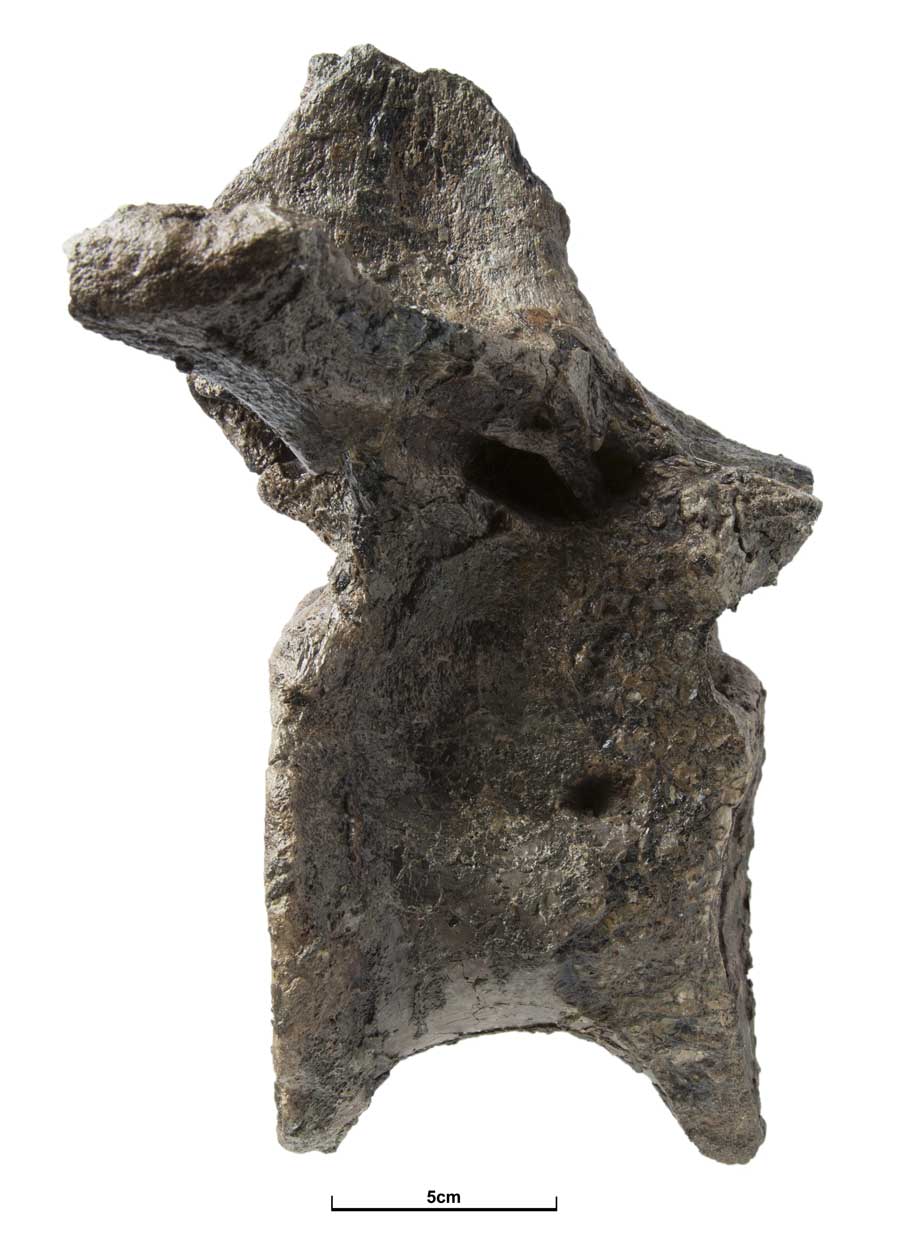
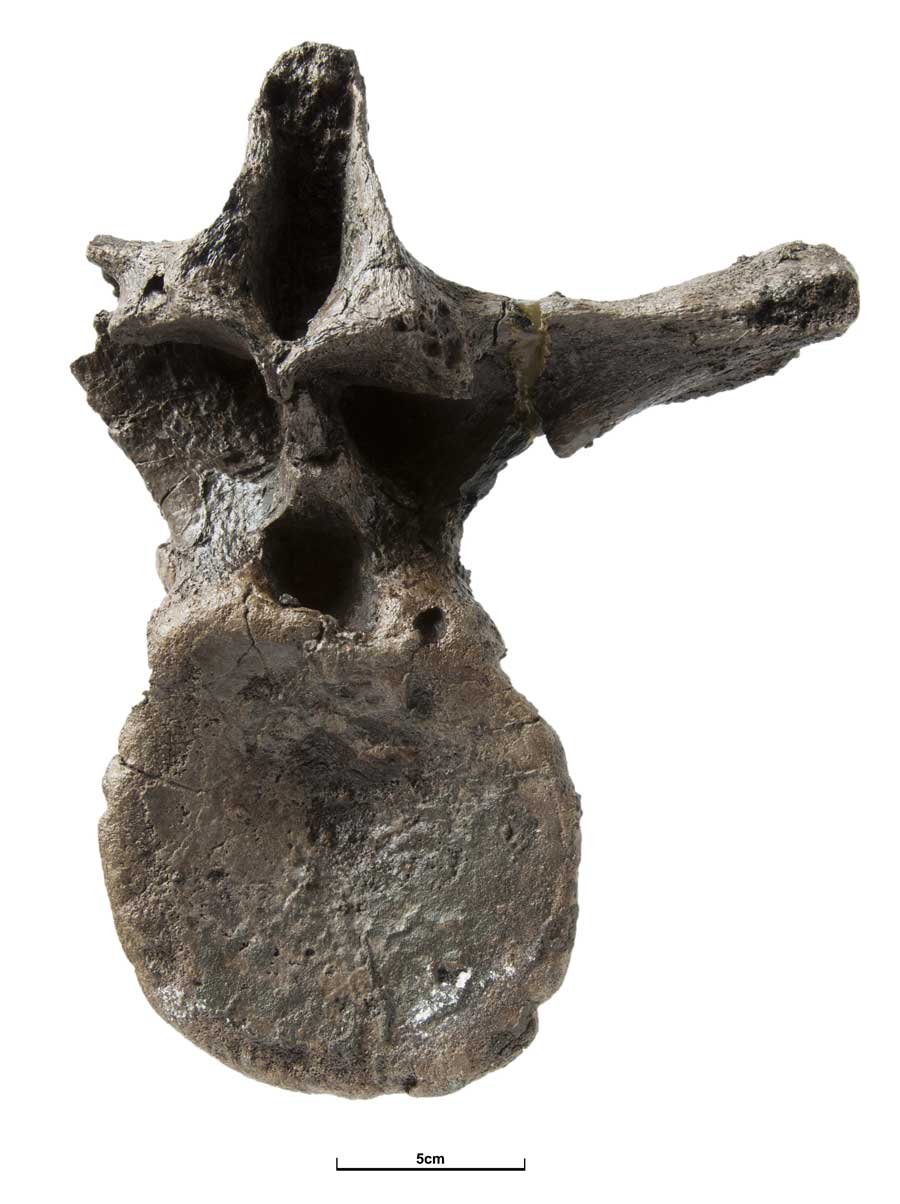
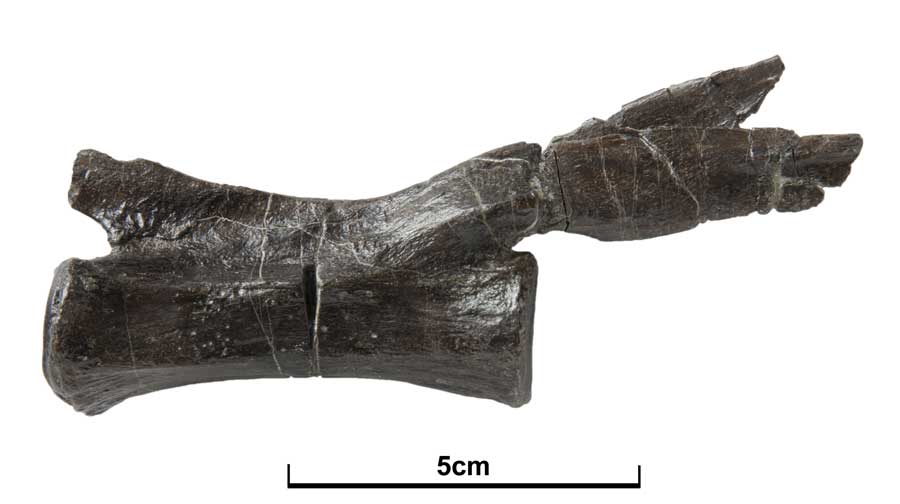
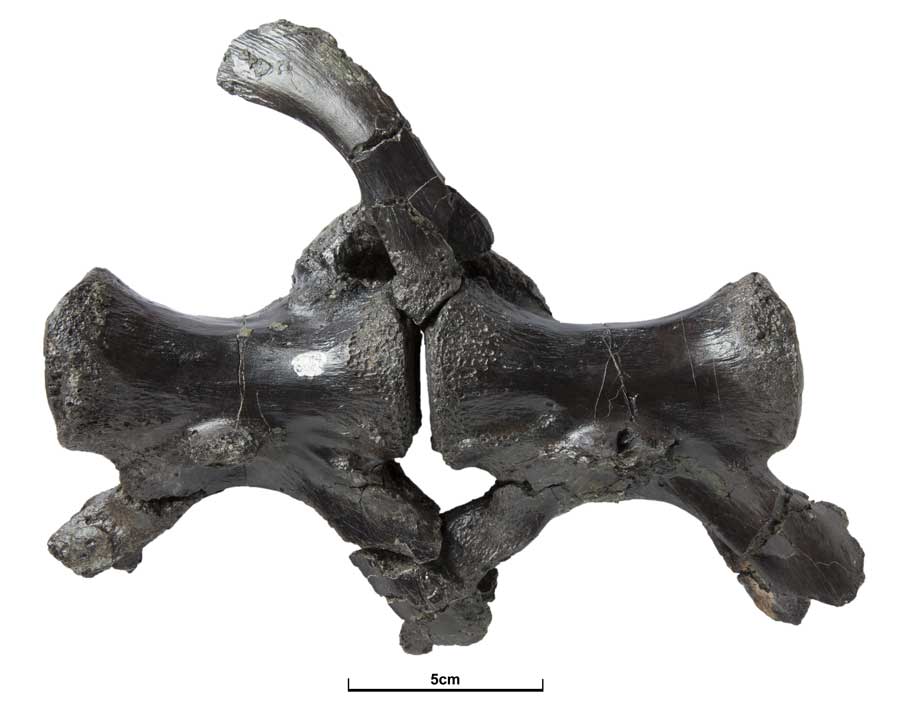
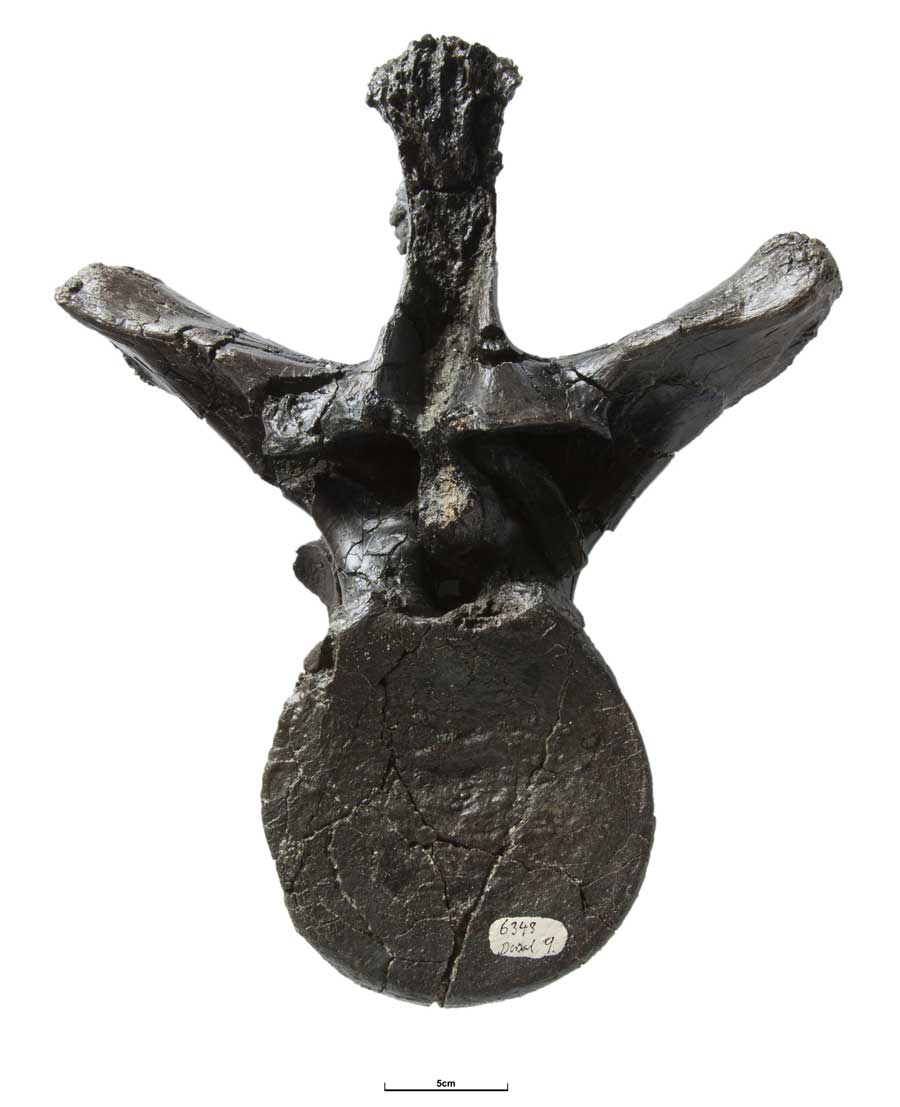
Both the cervical and dorsal vertebrae have prominant pleurocoels, the latter also showing wide, stout neural spines, and the sacrum is fused with solid centra. the caudals are elongate narrow waisted, with those to the anterior possessing thin blade-like neural spines. the posterior third of the caudal vertebrae have elongate prezygapophyses, which overlap the preceding vertebrae by 80% of the length of the caudal.
The scapula has a distal expansion, and is fused to the shallow coracoid. The ischia and the pubes have well defined obturator notches as opposed to enclosed foramina, and the pubic boot is 70% the length of the pubic shaft.
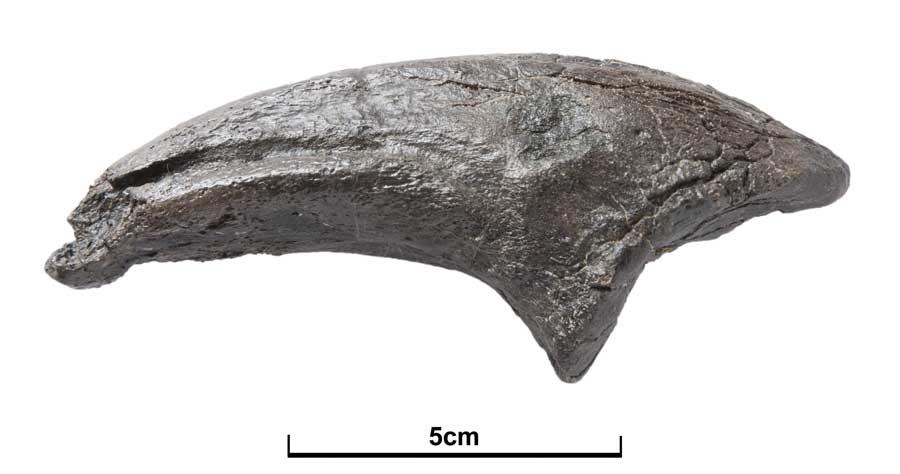
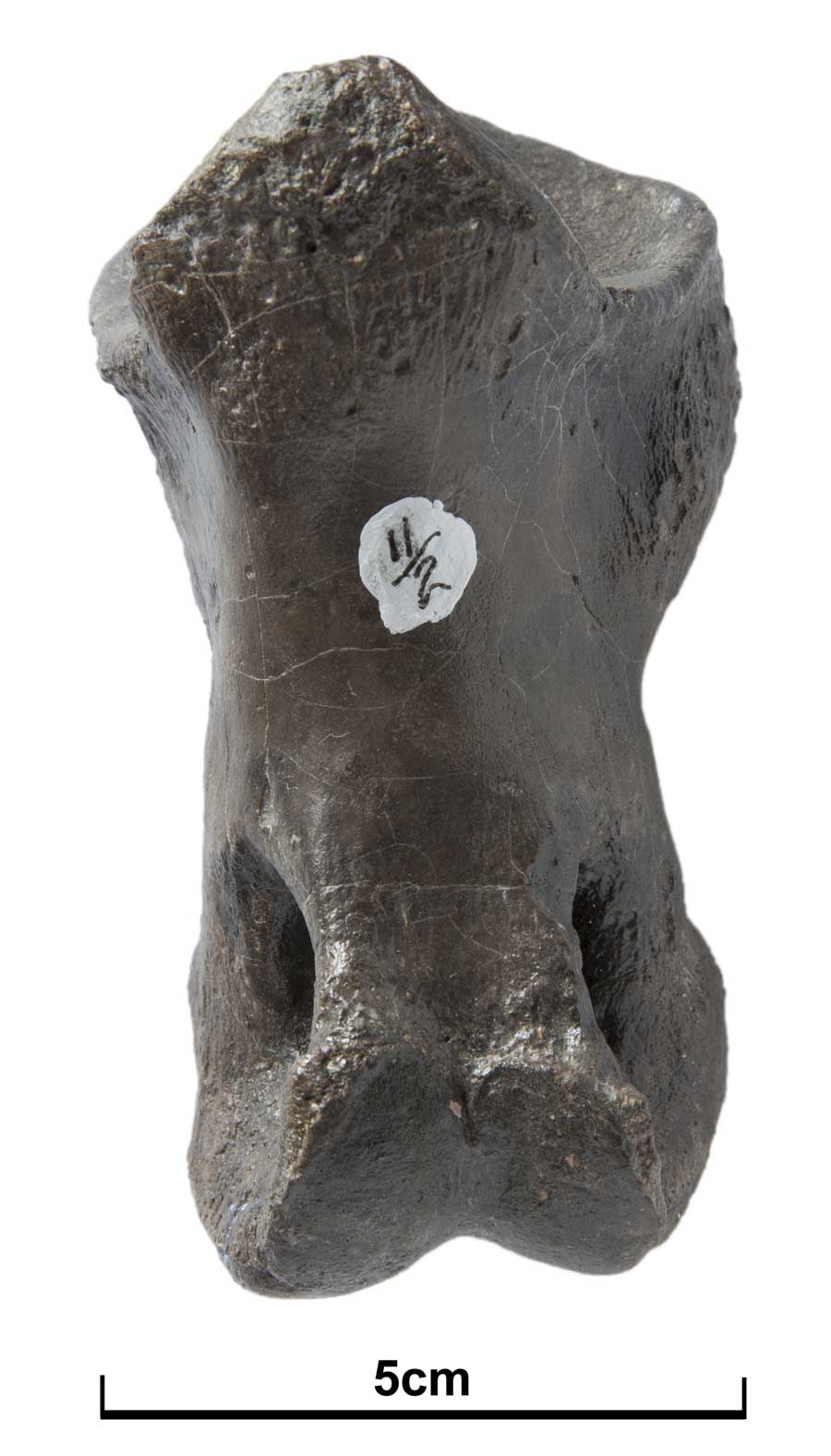
The femur has an elongate fourth trochanter, and is situated on the internal surface of the shaft, with an clearly defined ovalposterio-lateral muscle scar. The tibia has a bulge behind the crist-fibularis, and the fibula is slender. The pes has three functional toes, the ungual showing a dorsal groove.
HUTT, S. MARTILL, D. M. and BARKER, M. J. 1996. The first European allosaurid dinosaur (lower Cretaceous, Wealden Group, England). N. Jb. Geol. Paläont. Mb, 1996, 635-644.