
Meaning
Early tyrant
Length
4 metres (12 feet)
Classification
Theropoda,
Maniraptorformes,
Tyrannosauroidea Osborn, 1905
Eotyrannus lengi Hutt, Naish, Martill, Barker and Newbery 2001
Locations
The only specimen was extracted from the Wessex formation, in concrete-like mudstone up a high cliff face at Brighstone Bay, so it is a bit dangerous to hunt for this specimen. However, if you really want to find one then go ahead, but expect no sympathy from anybody should you fall and break a leg, or worse!
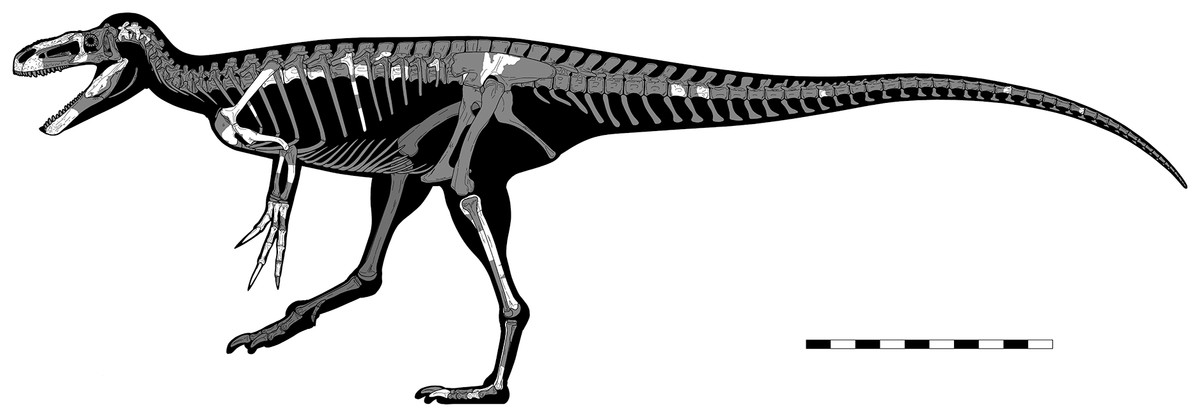
A small theropod, Eotyrannus would have preyed on the small dinosaurs such as Hypsilophodon. It walked on two legs, and almost certainly had feathers.
Eotyrannus was much smaller than Tyrannosaurus but the skull, shoulder and limbs have similarities.
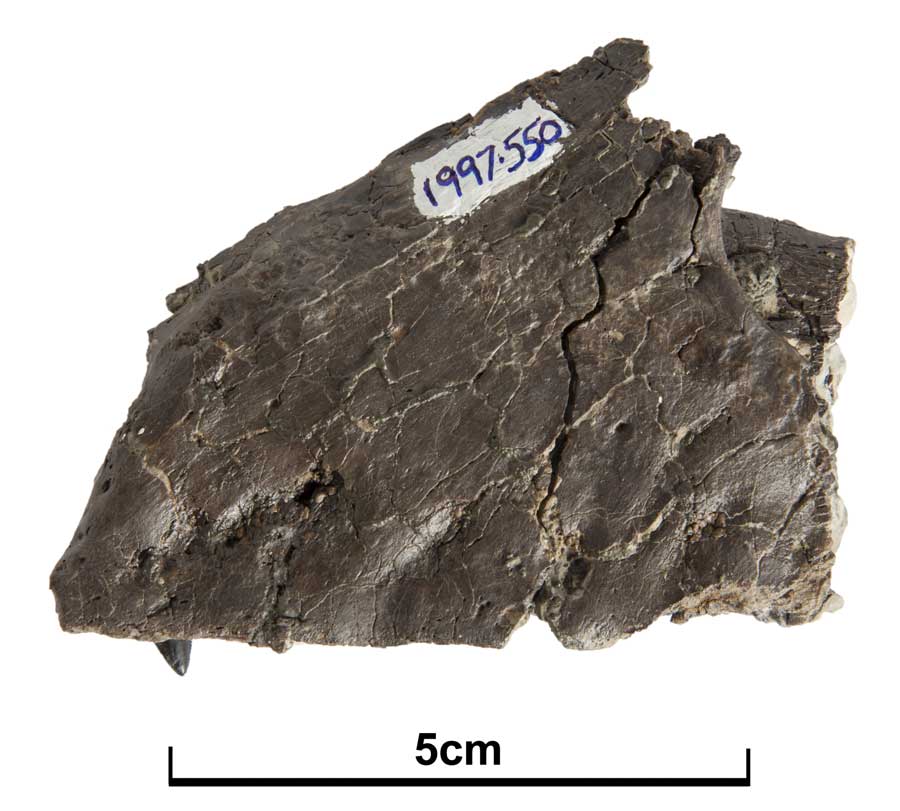
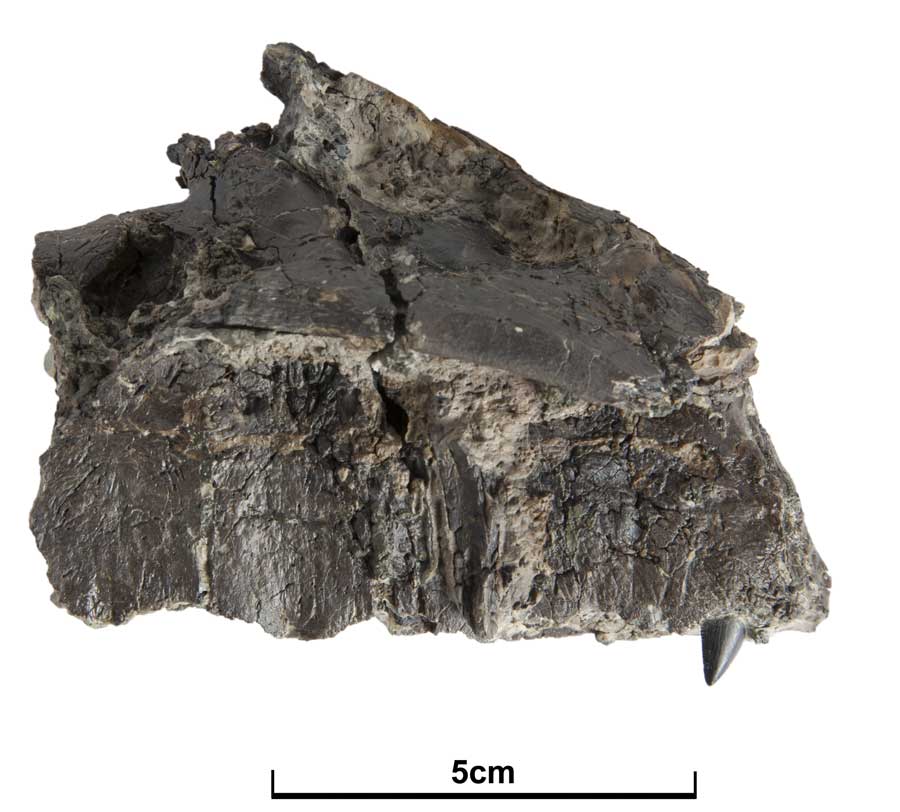
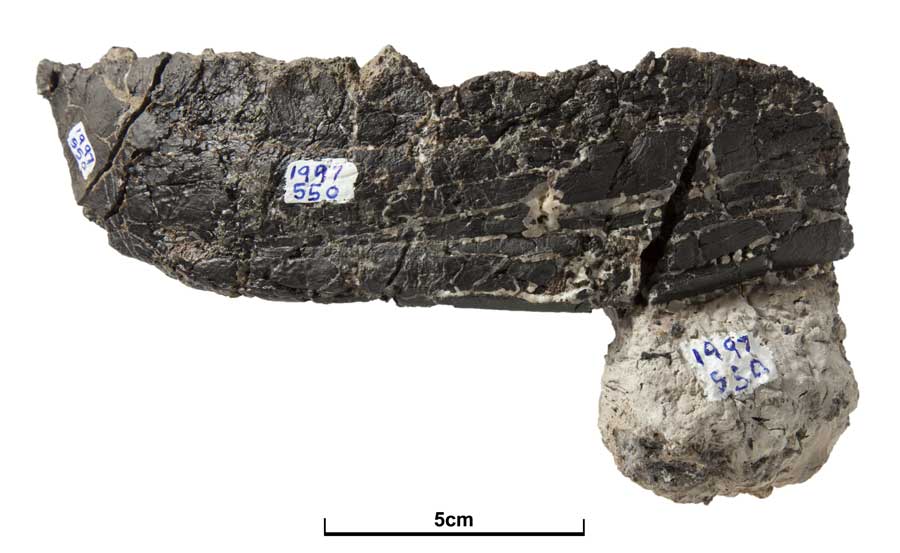
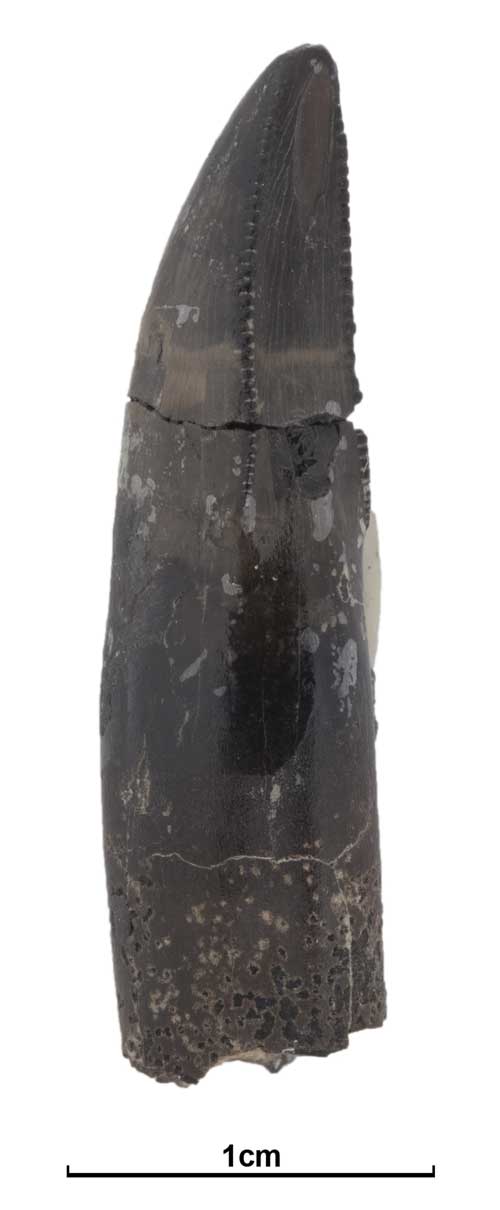
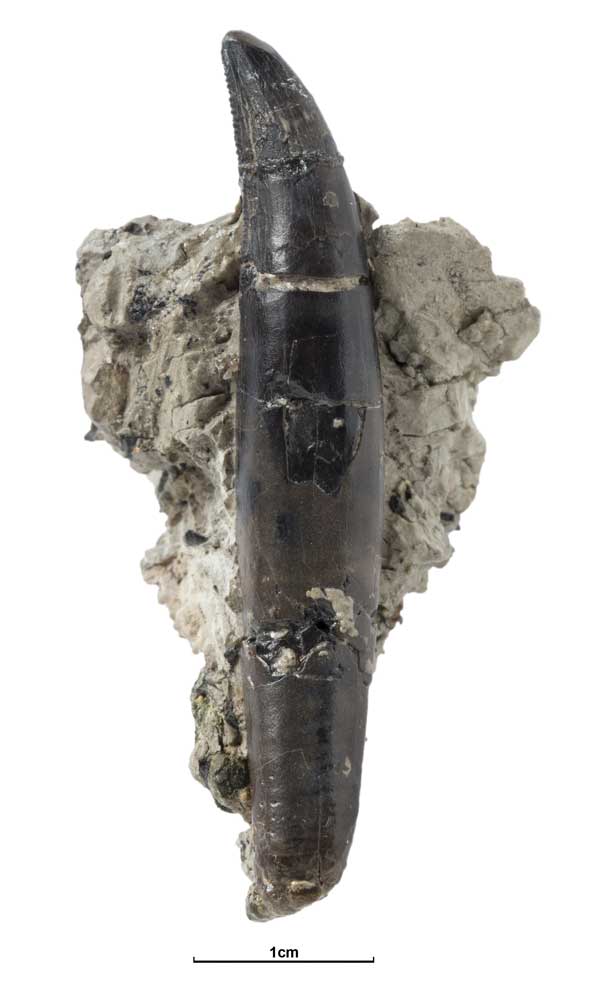
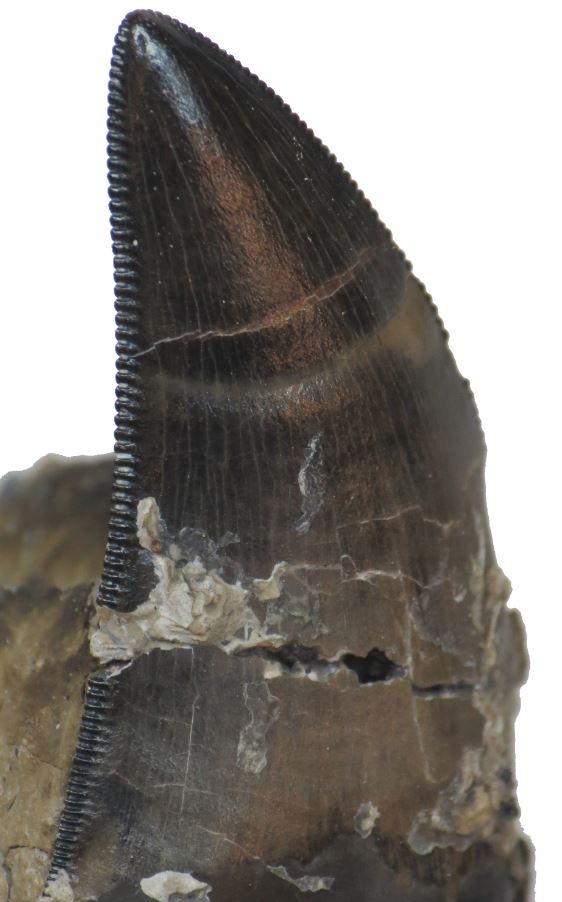
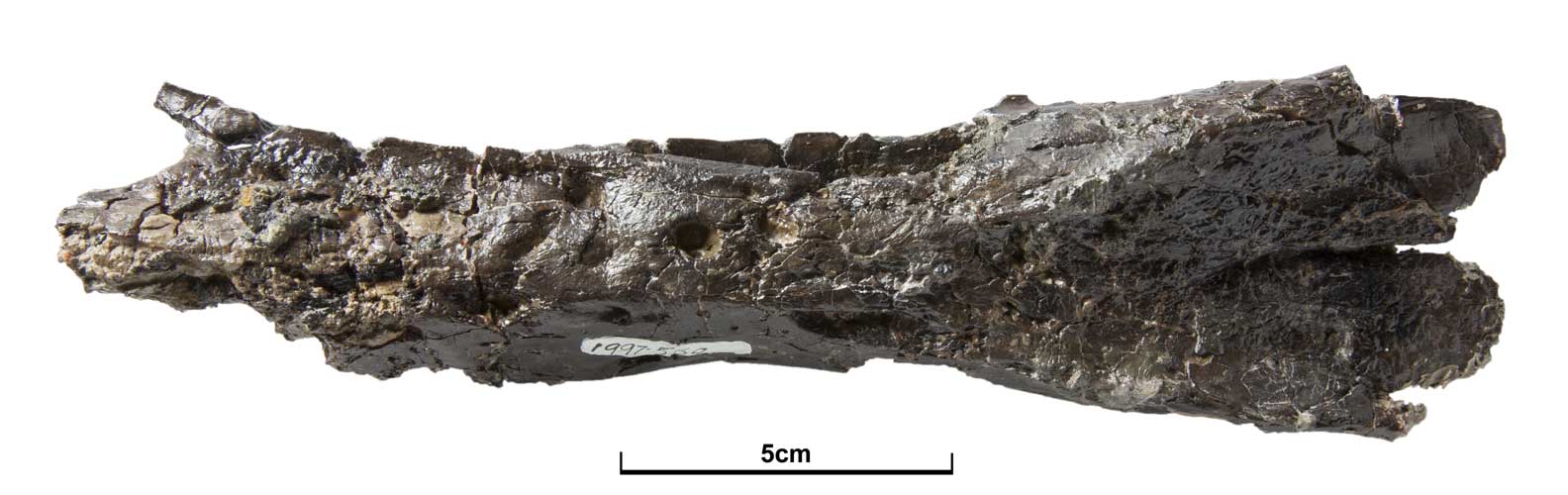
The teeth in the premaxilla are D/U-shaped in cross-section, with denticulations that continue over the tip and the rostral carinae bear denticles for less than half the length of the denticle-bearing part of the caudal carinae. There is a denticle size difference index (DSDI) of c. 1.5, with between 13-20 denticles per 5mm. The premaxilla is blunt with a vertical anterior border and the maxilla is peculiar in that it has a posteriodorsally located antorbital fossa border, with the part of the maxilla anterior to this laterally flat. The nasals are fused.
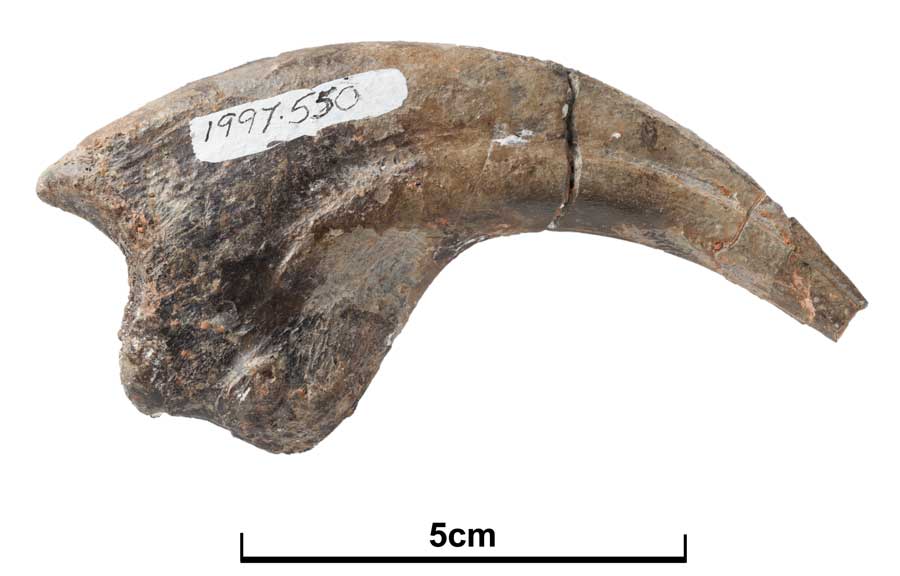
The manus is elongate and slender, with digit II nearly 95% the length of the humerus, and has three well-developed metacarpals, and the hindlimbs are gracile. The carpals not reduced to simple elements as in tyrannosaurids.
The humerus has a well-developed deltopectoral crest and there are a series of internal hollows. The coracoid has a prominent mediolaterally-wide, subcircular glenoid directed caudally, but the coracoid foramen is absent. The scapulae have an expanded dorsal end.
The tibia is elongate with a weakly developed cnemial crest (projecting process on the proximal part of the front surface of the tibia, to which lower leg muscles are attached) and a robust fibular crest. The cervical vertebrae are pleurocoelous, as is the first sacral vertebra.
Lack of element fusion elsewhere in the skeleton suggests that it is a subadult, so it may be bigger than 4 metres in length. Numerous character states are shared with tyrannosaurids, suggesting that Eotyrannus is a basal tyrannosauroid and as such one of the earliest.
Material is rare, so please report it if you find some…
A full monograph describing Eotyrannus can be found online HERE
HUTT, S., NAISH, D.MARTILL, D. M., BARKER, M. J. and NEWBERY, P. 2001. A preliminary account of a new tyrannosauroid theropod from the Wessex Formation (Early Cretaceous) of southern England. Cretaceous Research, 22, 227-242
NAISH, D and Cau, A. 2022. The osteology and affinities of Eotyrannus lengi, a tyrannosauroid theropod from the Wealden Supergroup of southern England. PeerJ 10:e12727.